Your driveway is one of the first things people notice about your home, and over time it collects a stubborn mix of oil stains, dirt, mould, lichen, and general grime — especially in Australia's humid coastal and subtropical climates. Pressure washing is one of the most effective ways to restore it, but done incorrectly it can damage your concrete or pavers, injure you, or cause problems with your neighbours or local council. This guide walks you through everything you need to know to get the job done safely and effectively.
Understanding Your Driveway Surface First
Before you even touch a pressure washer, take a close look at what you're working with. Australian driveways come in a few common materials — plain concrete, exposed aggregate, stamped or stencilled concrete, clay or concrete pavers, and asphalt — and each one responds differently to high-pressure water.
Plain and exposed aggregate concrete is generally very durable and can handle higher pressures without damage. Stamped or stencilled concrete, however, has a coloured or textured surface layer that can be stripped or eroded if you use too much pressure or hold the nozzle too close. Pavers are tough individually, but the sand-filled joints between them can be blasted out if you're not careful, leaving the pavers loose and unstable. Asphalt is softer than concrete and is the most vulnerable of the lot — it should only ever be cleaned on low pressure settings.
Getting this wrong means either a patchy, damaged surface or an expensive repair job, so knowing your material sets the foundation for everything else.
Choosing the Right Equipment for Australian Conditions
Not all pressure washers are equal, and using the wrong one is a common mistake. For a standard residential driveway, a machine that delivers between 2,000 and 3,000 PSI (pounds per square inch) with a flow rate of around 8–12 litres per minute is the sweet spot. Too low and you won't lift the grime. Too high and you risk surface damage, particularly on older or softer concrete.
Nozzle choice matters just as much as pressure. A 25-degree fan nozzle (usually colour-coded green) is ideal for general driveway cleaning — it spreads the water enough to avoid gouging while still delivering meaningful force. A 40-degree nozzle (white) is better for delicate surfaces like stencilled concrete or pavers. Avoid the red 0-degree nozzle entirely on driveways, as it concentrates pressure to a single point and will leave visible lines and pitting in the surface.
If you don't already own a pressure washer, hiring one from a tool hire company is a cost-effective option for a one-off clean. Just make sure to check the machine's PSI rating before you take it home, as some hire units are underpowered while others are built for industrial use and are too aggressive for residential concrete.
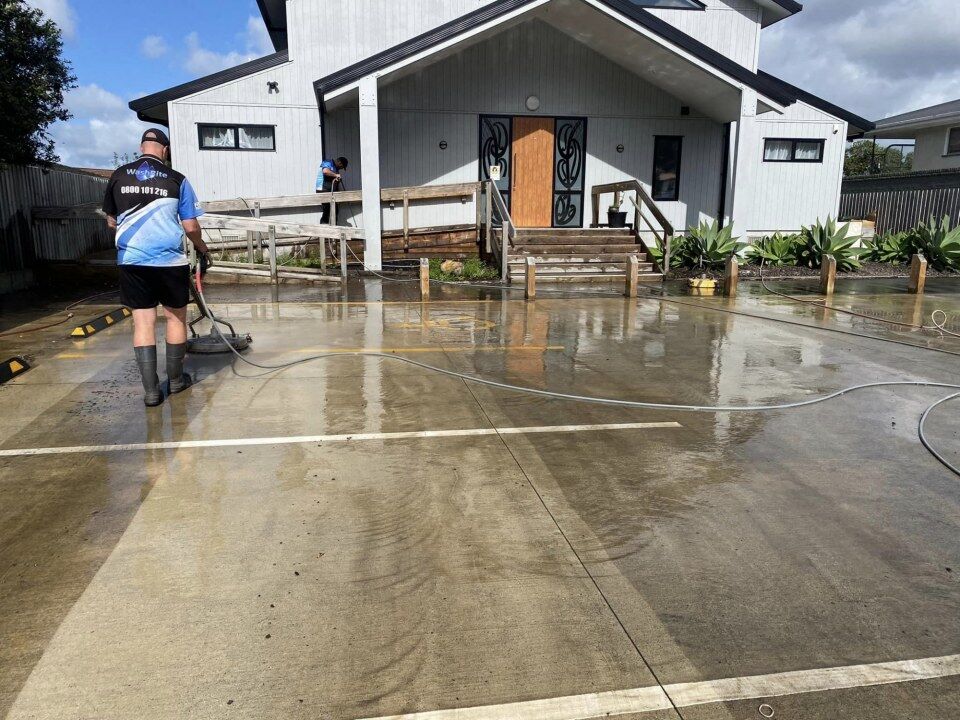
A surface cleaner attachment is also worth considering. This circular spinning tool fits onto the end of the lance and cleans in an even, overlapping pattern — it dramatically reduces streaking and speeds up the job on large flat areas like driveways. Most tool hire places stock these as an add-on accessory.
Safety Precautions You Should Never Skip
Pressure washing looks straightforward, but the water comes out with enough force to cause serious lacerations, eye injuries, and slip hazards. In Australia, where outdoor cleaning is a common weekend activity, injuries from pressure washers are more frequent than people expect.
Always wear closed-toe shoes — ideally rubber-soled — when operating a pressure washer. The spray can cut through soft footwear and cause significant injury to feet and ankles. Safety glasses or goggles protect your eyes from debris and deflected water, which can be travelling at surprising speed when it bounces off a hard surface. Long pants also offer an added layer of protection.
Never point the lance at people, animals, or vehicles, and keep children and pets well away from the area while you're working. The spray can knock small animals over and cause injury to bystanders who aren't expecting the force of the water.
Because you'll be working with electrical equipment near water, always plug your pressure washer into a safety switch (RCD — Residual Current Device) outlet. Most Australian homes have these fitted to outdoor power points, but it's worth checking before you start. A safety switch cuts power almost instantly if there's any electrical fault, which could save your life.
Be mindful of slippery surfaces throughout the job. As you clean, the combination of water, loosened dirt, and cleaning chemicals makes the driveway extremely slick. Work backwards so you're always stepping onto clean, drier ground rather than the wet surface you've just cleaned.
Pre-Cleaning Preparation
Good results start before you pick up the lance. Clear the driveway of vehicles, pot plants, outdoor furniture, and any loose objects that could get hit by the spray or become a trip hazard. Sweep away loose leaves and debris with a stiff broom — pressure washing over leaf litter just moves the mess around rather than cleaning the surface underneath.
If your driveway has significant oil or grease stains — common in garage apron areas — treat these before you start pressure washing. Apply a dedicated degreaser or a paste made from baking soda and dish soap, work it into the stain with a stiff brush, and let it sit for at least 15–20 minutes. Pressure washing alone won't remove deep oil stains; the degreaser breaks down the grease first so the water can flush it away.
Check whether any areas of the driveway have cracked concrete or loose pavers. High-pressure water can force its way into cracks and worsen them, or dislodge already-loose pavers. These spots should be repaired before cleaning, or at least cleaned with significantly reduced pressure.
The Right Technique for Pressure Washing a Driveway
Hold the lance at a consistent 45-degree angle to the surface, keeping the nozzle about 20–30 centimetres from the ground. This angle lets the water get under dirt and lift it rather than just pushing it sideways, and the distance prevents the concentrated spray from etching the concrete.
Work in long, overlapping strokes across the driveway in a consistent direction — typically from the highest point to the lowest, so the dirty water runs away from the area you've already cleaned. Avoid stopping the spray mid-stroke, as this can create visible marks where the pressure concentrated in one spot.
On pavers, keep the nozzle slightly higher than you would on solid concrete — around 30–40 centimetres — and use the 40-degree nozzle to avoid blasting out the jointing sand. After cleaning, you'll likely need to re-sand the joints using kiln-dried polymeric sand, which is available from most hardware stores and helps prevent weed growth between pavers.
If you're using a surface cleaner attachment, simply push it forward steadily in parallel passes, slightly overlapping each one. The spinning nozzles inside do the work for you, and the circular shroud contains the spray to keep the mess from going everywhere.
On particularly dirty or stained driveways, a second pass is often more effective than using higher pressure on the first go. Let the surface dry slightly between passes to see where more attention is needed.
Cleaning Chemicals and Environmental Considerations
Many Australian households add a cleaning agent to the pressure washer's detergent tank to deal with mould, lichen, or deeply ingrained staining. For concrete, a diluted solution of sodium hypochlorite (bleach) is very effective against biological growth like moss and mould. Specialist concrete degreasers handle oil stains, and there are also commercial driveway cleaning concentrates available from hardware stores.
However, what goes down your driveway doesn't stay there. In most Australian states, it's illegal to allow wastewater containing chemicals, solvents, or detergents to flow into stormwater drains, as these lead directly to waterways and the ocean. Before using any chemicals, check your local council guidelines around stormwater pollution — in some areas, even plain water runoff from commercial cleaning operations requires a trade waste permit.
As a general rule, use the minimum amount of chemical necessary, rinse thoroughly with clean water after cleaning, and where possible, direct runoff onto lawn or garden areas rather than the gutter — provided the product label says it's safe for plant contact. Biodegradable, plant-based cleaning concentrates are increasingly available and are a more environmentally responsible choice.
After the Clean: Sealing Your Driveway
Once your driveway is clean and fully dry — which in most Australian climates means waiting at least 24–48 hours after washing — consider applying a concrete sealer or paver sealer. Sealing provides a protective barrier against oil stains, UV damage, and moisture penetration, making future cleans much easier and extending the lifespan of the surface significantly.
There are various sealer types available, from penetrating sealers that soak into the concrete to topical sealers that leave a surface film. For most residential driveways, a penetrating sealer is recommended as it doesn't alter the appearance of the surface and doesn't peel or flake over time.
When to Call the Professionals
While pressure washing your own driveway is absolutely achievable for most homeowners, there are situations where it makes more sense to bring in the experts. If your driveway is very large, has significant mould or lichen coverage, contains heritage or decorative surfaces that could be damaged by amateur technique, or if you simply don't have the time or physical capacity to do it safely, a professional exterior cleaning service will get better results more efficiently.
Professionals have access to commercial-grade equipment, specialised chemicals, and the experience to read a surface correctly and adjust their approach on the fly. They also carry the appropriate public liability insurance, which matters if something goes wrong.
Looking to get your driveway professionally cleaned without the hassle? Get a free quote from Wash Rite Australia today and let our team handle it for you.
Related Reading from Wash Rite Australia
If you found this guide useful, you might also want to read:
- Best Method for Driveway Stain Removal in Melbourne— Covers pre-treating oil, moss, and rust stains, which directly complements the driveway safety guide.
- The Ultimate Guide to Pressure Washing: Tips, Techniques, and Benefits — A broad pressure washing guide that pairs well as a "go deeper" resource.